Wednesday, 17 April 2019

Comment l’Afrique se paye la présidence française


Comment l’Afrique se paye la présidence française

Michael Schmidt, Afrique du Sud, 2011 (traduit par Vidal Cuervo, Alternative Libertaire, France)

Il semblerait que depuis peu, en Afrique, on ne serve plus la soupe exactement dans l’ordre habituel. De curieux renversements s’effectuent en effet, dont le moindre n’est pas celui du Portugal, suppliant son ancienne colonie, l’Angola, de lui venir en aide ; ou encore de voir des citoyens européens se repliant sur leurs colonies de jadis pour fuir la crise dans leurs pays, et accepter des jobs sous-payés dans l’arrière-pays africain (1).
Mais il existe une relation bien plus ancienne et plus discrète entre Afrique et Europe qui renverse l’image convenue de leaders africains corrompus par une aide-européenne-sous-conditions. Ce phénomène est celui de la valise (en français dans le texte), système par lequel depuis un demi-siècle les dictatures africaines ont envoyé des millions en France pour corrompre le processus politique européen.
Le premier tour des élections françaises se tiendra le 22 avril prochain. On s’attend que le candidat socialiste François Hollande prenne le dessus sur le président gaulliste sortant Nicolas Sarkozy, sans obtenir toutefois de majorité préparant le décor à une fuite de capitaux en mai.
Toutefois, les électeurs français connaissent le système de la valise, il est donc intéressant d’examiner ce phénomène si bien intégré à la conduite des affaires franco-africaines, et qui semble se répandre encore.
Le 5 octobre 2011, le Centre d’Etudes Françaises et Francophones de la Duke University (Caroline du Nord) organisait un débat intitulé « les colonies rendent la monnaie de la pièce: culture et corruption dans les relations franco-africaines ». Notre article reprend des extraits de ce colloque.

La France post-coloniale, une république « valisière »

Philippe Bernard, ancien correspondant du Monde en Afrique, entama le débat en faisant la remarquer que Robert Bourgi, (2) conseiller « non-officiel » de Sarkozy, avait accusé (septembre 2011) son prédécesseur Jacques Chirac et son premier ministre Dominique de Villepin, d’avoir reçu d’énormes pots-de-vin sous la forme de valises remplies d’espèces, pendant la mandature conservatrice de ces derniers (1995-2007) , aux fins de financer la campagne de Chirac.
Cinq états d’Afrique de l’Ouest et Centrale étaient concernés - Congo, Burkina Faso, Sénégal, Côte d’Ivoire et Gabon. Dans une interview à Canal+, Bourgi soutenait également que la campagne en 1988 de Jean-Marie le Pen du Front National (extrême-droite) fut en partie financée de la même manière. Chirac, autant que Villepin ont nié les allégations de Bourgi.
Selon la recension par le Telegraph (3) Bourgi, déclarait au Journal du Dimanche qu’il avait personnellement transporté des dizaines de millions de francs chaque année, les montants étant destinés aux courses à la présidence, sous-entendant par-là que le liquide était destiné aux campagnes de Chirac. « J’ai vu Chirac et Villepin compter l’argent devant moi ».
Le même Bourgi soutient qu’il fit passer des billets de la part de 5 présidents africains: Abdoulaye Wade of Senegal [au pouvoir de 2000-2012]; Blaise Campaoré du Burkina Faso
[1987 à ce jour]; Laurent Gbagbo de la Côte d’Ivoire [2000-2011]; Denis Sassou Nguesso du Congo [1997 à ce jour] et Omar Bongo du Gabon [1967-2009], que M. Bourgi appellait « Papa ».
Ensemble, il prétend qu’ils auraient contribué quelques 6,2 million de livres sterling à la campagne gagnée de Chirac en 2002.
Un sixième leader se serait joint au club des donateurs, le président Obiang N’Guema de Guinée équatoriale [1979 à ce jour] avant qu’un Villepin, rendu nerveux ne mette fin au système en 2005. Toujours selon Bourgi.
Ce dernier affirme avoir personnellement fait fonctionner le système pendant 25 ans, en échange duquel les dictateurs africains se voyaient accorder d’immenses réductions de leur dettes envers la France, une fois leur « sponsor » à l’Elysée.
Bernard pense que le système est né de concept de « Françafrique », ce mélange des genres entre intérêts français et africains.
Secret public depuis les libérations africaines des années 60, à partir desquelles des accords furent signés stipulant que la France userait de son influence pour defender les régimes africains, tandis que ceux-ci donnerait une exclusive à l’ancienne puissance colonial sur ses matières premières et un droit d’intervention militaire, à l’occasion de menaces contre la sécurité africaine.
Dans les années 80, les gaullistes (opposés alors au gouvernement socialiste de François Mitterand) furent pareillement accusés de toucher un pourcentage des revenus du pétrole gabonais pour financer leurs campagnes – mais sans preuves.
Le professeur Stephen Smith, ancien responsable du bureau Afrique de Libération, et prédécesseur de Bernard au Monde, se souvient des rumeurs disant que « l’argent à destination du bureau du premier ministre étaient dissimulé dans des djembe ». Ce bureau ne disposant pas de l’air conditionné, l’imaginer en train de compter son argent en bras de chemise est assez amusant ».
Plus sérieusement, Smith se souvient qu’en 1971, au tout début d’un règne qui ne devait finir qu’en 1993 Félix Houphouët-Boigny, président de Côte d’Ivoire avait fait don de « sacs d’argent » au gouvernement de Georges Pompidou.
Il y avait, dit Smith “une pratique continue, depuis Charles de Gaulle [au pouvoir de 1959 à 1969] à Giscard d’Estaing [1974-1981], jusqu’aux gouvernements libéraux actuels ». Tous soutenus par le système de la valise. Ce qui revient, de fait, à un Etat postcolonial informel ».
Il faut se souvenir que cette période – la Vème république – fut créée en 1958 à la suite de la crise qui devait précipiter la France dans la guerre d’Algérie. Nous sommes donc face à un demi-siècle de dictateurs africains, installés et maintenus en poste par la puissance militaire française, qui grâce au pétrole d’Afrique et autres revenus, devait soutenir à son tour, une chaîne de régimes conservateurs en France. Smith note toutefois que le système de la valise à l’oeuvre dans les 6 pays mentionnés, était également relayé au moyen d’entreprises françaises présentes dans les anciennes colonies.
Les unes payaient les conservateurs gaullistes, tandis quels autres s’occupaient des socialistes et communistes. Etant donné la position stratégique de la France en Europe, son influence n’étant égalée que par l’Allemagne et la Grande Bretagne, quiconque est en mesure de se payer la présidence française, s’achète de fait également, une énorme part d’influence en Europe.
Les politiques progressistes des deux continents ont été rendues inopérantes par ces tractations secrètes.
Smith raconte son premier scoop concernant les pratiques occultes du ténébreux Bourgi, pour Libération en 1995. Il s’agissait d’un papier expliquant la manière dont le dictateur zaïrois Mobutu se vit acquitter de ses dettes, hors de toute procédure. Mobutu « éleva son sceptre et je craignis qu’il ne me frappe avec! ». Robert Bourgi touchait 600 000 euros de Mobutu, pour éteindre un feu et en gagnait un million supplémentaire pour m’empêcher d’écrire le livre que j’avais en cours. »
« La comptabilité de Bourgi est impeccable, il ne fait affaire qu’en liquide, donc il y a peu de preuves disponibles ». L’argent du pot de vin devait être déposé sur des comptes Sud-africains ou libanais, raconte Smith.
La portée du pouvoir officieux de Bourgi était considérable. Smith raconte que lorsque Sarkozy voulut qu’on le prenne en photo avec Mandela – vieillissant, quasi-reclus et n’accordant que très rarement de photos - il suffit à Bourgi d’appeler « Papa » (Omar Bongo), qui persuada l’ancien président d’Afrique du sud de prendre l’avion pour Paris en 2007.

Elargissement du système de la Valise

Professeur Achille Membe, spécialiste de l’Afrique postcoloniale ajoute que la valise est un système de « corruption mutuelle » qui a « menotté la France comme l’Afrique depuis des décennies ».
« La relation n’est pas seulement corrompue en termes d’argent … il s’agit d’une corruption culturelle qui a émasculé les sociétés civiles africaines en profondeur. Les perspectives sont les suivantes, la France dispose encore de bases militaires sur le continent avec les moyens de dégager un Gbagbo. Mais si elle doit payer le prix fort d’une intervention, elle y réfléchira à deux fois ».
La mainmise de la France sur le continent africain, selon Bernard, commence à être éclipsée (notamment par les États-Unis): (4) ce qui impacte la monnaie francophone (le franc CFA) lié à l’euro en crise, ainsi que les entreprises françaises qui perdent leur exclusivité auprès des régimes africains, à mesure que le FMI reprend les rênes dans de nombreux pays, ou que la Chine, le Brésil et l’Inde déversent leurs investissements sur le continent.
Sarkozy lui, veut mettre un terme à un « réseau d’intermédiaires », tels que Bourgi « agissant comme une diplomatie parallèle ».
Pour Smith, la France gagne plus financièrement de ses relations avec l’Afrique anglophone – Afrique du Sud et Kenya en particulier - qu’il ne le faisait avec ses anciennes colonies, mais il prévient : « on assiste à une multiplication des modèles d’exception à la française : la relation avec la Chine est tout aussi corrompue ; la chasse gardée, le privilège français est devenu mondialisé ».
Membe ajoute que selon lui, le palissement de l’étoile française est surtout au fait que la France elle-même est entrée dans un processus de provincialisation, de conservatisme culturel et de retrait des affaires du monde – et ce, bien que sa langue continue d’être dominante en Afrique, et malgré l’existence d’une diaspora de lettrés africains.
Toujours pour Membe les « révélations de Robert Bourgi », n’en sont pas vraiment en Afrique, où « elles n’ont pas été perçues comme un scandale » en raison du cynisme qui domine lorsqu’on évoque les relations franco-africaines dont on connaît depuis longtemps le déclin progressif.
« La géographie n’est plus centrée sur Paris… les Robert Bourgi sont les derniers spasmes d’un équation morte, à genoux, qui n’est plus historique mais anecdotique. La France va devenir une parenthèse ».
Mais il est n’est pas du tout évident que le système des valises soit terminé, ou qu’il ait perdu sa capacité à influencer l’histoire africaine.
Pour Smith la réputation-même de Sarkozy devint douteuse lorsqu’il barra d’un trait 40% des dettes du Congo et du Gabon, là où Chirac l’avait positionné à 8% seulement. Effectuer des paiements à Sarkozy aurait donc constitué un « bon investissement de la part de leaders africains ». Si Sarkozy aussi est impliqué, la fin de partie jouée par Bourgi et consistant à déballer l’affaire des valises après 25 ans, et
affirmant qu’elles se sont arrêtées avec Chirac, ne vise donc pas à salir Chirac. L’homme est mourant et politiquement fini. Il s’agit donc plutôt de menacer Sarkozy tant qu’il est encore président, le forçant à permettre à Bourgi de se retirer en toute quiétude, sans craindre de poursuite, à 67 ans, dans sa demeure nouvellement acquise en Corse.
Les racines du système sont à chercher, selon Smith, dans le fait qu’à l’époque où les Européens sont venus en Afrique, ils se sont « déboutonné » enclenchant cette relation fondée sur la corruption. Mais il faut être deux pour danser le Tango, alors que dire du rôle des leaders africains eux-mêmes? « Si j’étais à leur place, reconnaît Smith, je continuerai d’investir dans la France. Car l’ONU, le FMI … continueront de se tourner vers la France quand il leur faut de l’aide, même si son bras de levier n’est plus aussi efficace. Les choix des présidents africains continuent d’avoir de l’importance ».
Il est clair que le système des valises va perdurer, pour s’élargir sans doute à de nouvelles puissances - USA, Chine, Brésil, Inde et Afrique du Sud – et ironie du sort, le taux de croissance du continent étant de 5,5 %, il est bien possible que la capacité de l’Afrique à influencer et corrompre les affaires du monde… augmente.

(1) un exemple de ces contes (en anglais) : www.nytimes.com/2010/07/14/business/global/14angolabiz.html  
(2) Né à Dakar, dans une famille libano-française, Il fut admis au barreau de Paris. Ancien conseiller de Chirac et Villepin, Sarkozy lui accordera la Légion d’honneur en 2007. 
(3) Un exemple de ces contes (en anglais): /news/worldnews/europe/france/8756097/Jacques-Chirac-regularly-received-cash-from-African-leaders.html  
(4) Dans les années 1960s,  il y avait  20 000  soldats français stationnés en Afrique. Ils sont 5000 aujourd’hui, mais avec une capacité technique largement supérieure. Au Mali, toutefois, qui vient de vivre un coup d’Etat, la présence étasunienne est significative, tandis que les Français ont indiqué qu’ils n’interviendraient pas comme ils le faisaient par le passé. Sarkozy a rouvert la base militaire en côte d’ivoire qui sent largement la naphtaline, mais l’intervention française de 2011 se fit sous mandat de l’Onu.

[FIN]

Tuesday, 16 April 2019

African Safe Havens Initiatives


This article appeared last year in the journal Fresh Perspectives, a publication of IETM, Arts Everywhere and Musagetes (cover above). Thanks to diligent editor Sidd Joag.

05. RELOCATION OF ARTISTS AT RISK

With respect to relocation of artists in danger, there continues to exist a binary logic of safety and danger being associated with the Global North and South respectively. The tendency to
relocate artists from the Global South to Western Europe or North America has overlooked the potential of and need for interregional support networks for persecuted individuals and communities. In response, some international networks/organizations like ICORN are actively pursuing collaborations to expand safe haven options in the Global South, including Michael Schmidt’s work in South Africa (see below), the Arts Rights Justice Academy regional laboratories in Salvador, Brazil and Beirut, Lebanon.

African Safe Havens Initiatives
Michael Schmidt. Convenor, Southern African Cities of Refuge Project

With repeated failures by UN peace-keeping missions to protect refugees, Africa has probably done better by its animals than by its people – so I was intrigued when introduced in 2012 to the International Cities of Refuge Network (ICORN), which provides refuge for persecuted writers, artists and activists.  ICORN wanted to expand its network of cities into the developing world. The desire to do so was partly to prevent ICORN becoming another “West saves the Rest” initiative, as well as to reduce the culture shock experienced by displaced people.  For example, when Kenyan poet Philo Ikonya was relocated to Norway by ICORN, her teenage son had to learn Norwegian to complete his schooling; he could have studied in English were they relocated to South Africa.
Back in 2012, ICORN’s sole city outside Western Europe was Mexico City. Since then it has expanded to include – apart from new cities in North America – Oaxaca in Mexico and Belo Horizonte in Brazil, with more being negotiated elsewhere.  In Southern Africa, we are targeting the cities of Windhoek in Namibia, plus Cape Town, Johannesburg and the university town of Stellenbosch in South Africa, to bring them on board as ICORN cities.  The project was founded under the aegis of the Institute for the Advancement of Journalism of which I was then Executive Director.  After moving to freelance work in 2015, I relocated project oversight to the Professional Journalists’ Association, and PEN’s South African chapter has since partnered with us.
Progress has been steady but slow, as working with universities and municipalities can be bureaucratic. However, the project held launches in Johannesburg in May and in Cape Town in July 2014 to introduce academics and city officials to the Cities of Refuge concept; films relevant to the exiled creative experience were screened – Beate Arnestad’s Silenced Voices on Sri Lankan journalists and Marion Stalens’ Silence or Exile on ICORN guest writers. Because most exiled creatives – whether choreographers, film directors, poets, journalists or painters – want to continue doing what got them into trouble in their home countries, the project requires the assistance of third parties to give them that platform. So we have engaged the Universities of Johannesburg, Cape Town, and Stellenbosch to explore possibilities – and have also established relations with the Holocaust and Genocide Centres in Johannesburg and Cape Town because of our mutual interest in interrogating issues of migration and prejudice.
So far, the most progress has been made in Cape Town where, initially, the fact that the city is run by the opposition Democratic Alliance assured that its decisions in this regard would not be aligned to national politics and foreign policy concerns (this is why ICORN works at city and not national level). We conducted an ICORN tour of Cape Town in May 2015, bringing guest writers Parvin Ardalan, an Iranian journalist, and Ramy Essam, an Egyptian musician, to meet officials, academics, and activists, and were tentatively offered a defunct museum in a converted suburban house as a possible ICORN residence. A bilateral agreement signed in 2016 between the mayors of Cape Town and Malmö in Sweden, a City of Refuge, will now be used to drive that project to signature and activation – hopefully in 2018.
Stellenbosch has proven slower. The original mayor who we met with in 2015 has been replaced, but the local university’s journalism department is interested in the project. Johannesburg was revived in 2017 by a range of discussions on possible venues that incorporate theatres, dance studios, computer rooms, exhibition spaces, and residential apartments. There, our project coincides with a similar initiative by the Pan-African Human Rights Defenders’ Network (PAHARDN) which aims at establishing Safe Hubs for persecuted human rights defenders in: Johannesburg, because of its cosmopolitanism; Kampala, Uganda, because of it successfully absorbed Somali and Burundian refugees; Abidjan in Côte d’Ivoire, because of a new law explicitly providing for such safe haven, and; Tunis in Tunisia, because of its new democratic dispensation; the initiative was launched in October 2017 with ICORN participation: online here.
In June 2016, we relocated a Zimbabwean human rights defender in exile in South Africa to Windhoek, Namibia, who was seriously at risk of assassination by state agents. Two of his colleagues had already been murdered and one narrowly survived a poisoning. Relocation funds were provided by the World Organisation Against Torture (OMCT). It was an operation fraught with danger that almost failed twice and resulted in the defender eventually returning to South Africa. But it taught us valuable lessons about such relocations which we shared at a conference with PAHRDN in August 2016. We have since, in 2017, successfully relocated a persecuted poet and blogger from Lesotho to South Africa, and are involved in monitoring the status of several other at-risk creatives. Our hope is that 2018 will finally see the project mature with Cape Town and perhaps Johannesburg signing on as ICORN cities.

[In fact, things did consolidate in late 2018 and a safe havens initiative will shortly be launched in Johannesburg. I will post details about that soon]

[ENDS]

Thursday, 7 March 2019

Stuart Christie on Neo-Nazis and white Rhodesia


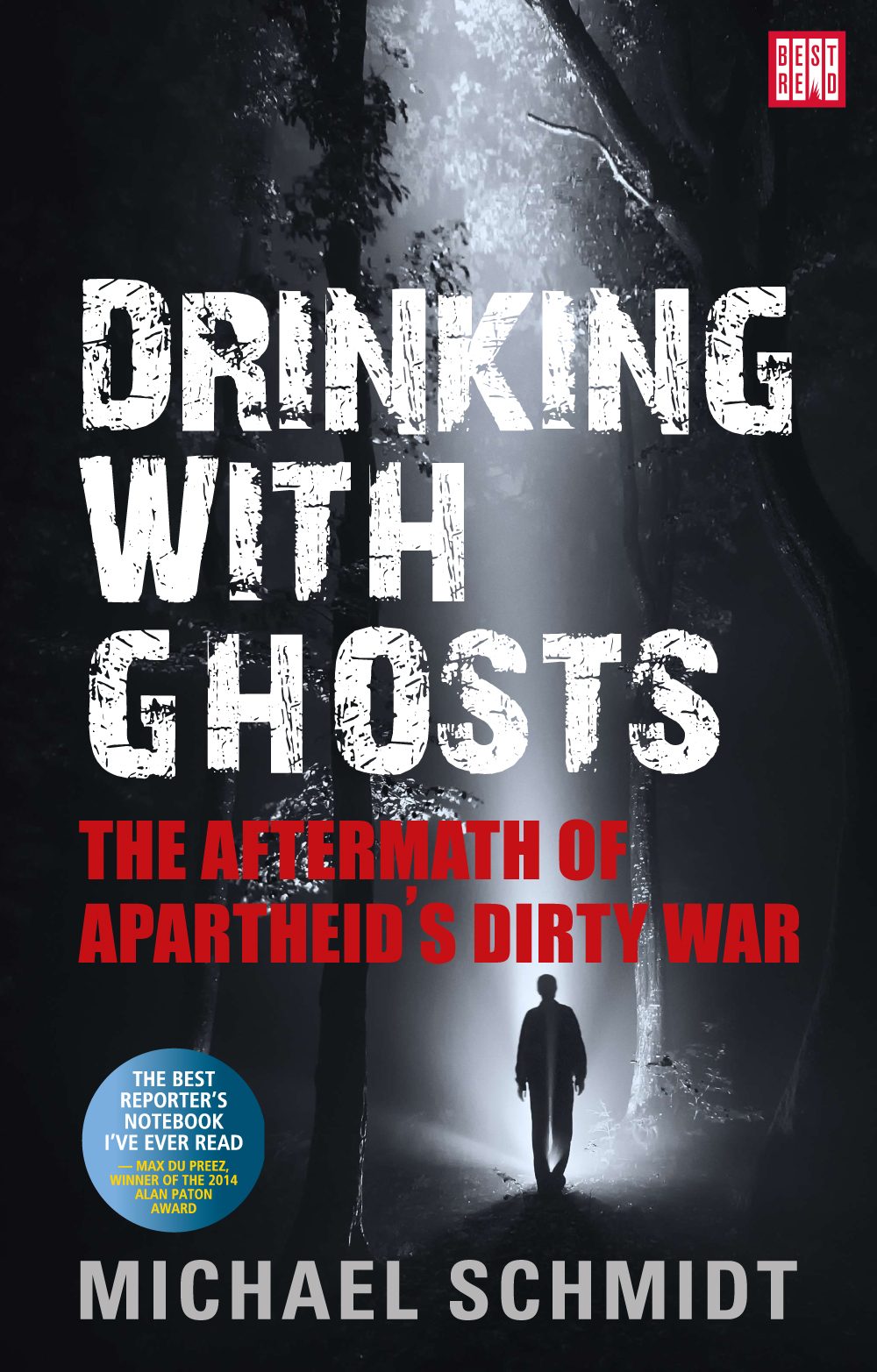
This is an extract from Drinking With Ghosts (BestRed, 2014):

The final phases of the battle to save white Rhodesia
attracted an eclectic assortment of soldiers of fortune, white
supremacist ideologues, military specialists, desperadoes
and opportunists. The main recruiter was Major Nicholas
Lamprecht of the Rhodesian Light Infantry, who, according
to Stuart Christie’s probing study of neo-fascist networks,
Stefano delle Chiaie: Portrait of a Black Terrorist, ‘recruited and
trained’ the ‘Rhodesian mercenaries … (39 in June, 21 in July
and 34 in September 1976)’ – drawing many from the ranks
of the 1 500-strong Frankfurt-based neo-Nazi organisation
the Kampfbund Deutscher Soldaten (German Soldiers’
Combat League), co-founded by Dr Eberhardt Taubert.
Taubert, who died in 1976, was a shadowy figure who
had joined the Nazi Party in 1931, rising to the rank of SS
Sturmführer under Josef Goebbels in Berlin, and later
becoming chief of Nazi anti-communist propaganda in the
occupied territories. Taubert found refuge South Africa
and Iran after the Second World War, before returning to
Germany in 1950 when he was recruited into the ex-Nazi
anti-communist Gehlen Organisation, worked for CIA front
companies, and advised NATO on psychological warfare.
Christie writes: ‘For over twenty years Taubert was the main
source of finance to the neo-Nazi and extreme right groups
in Europe, acting as a conduit for money from businesses
and foundations …’
Christie also notes links between the South African
military and the neo-Nazi networks: ‘In 1972 the Bolivian
businessman and security adviser Klaus Altmann, otherwise
known as Klaus Barbie, named Otto Skorzeny [the SS
special forces colonel who had rescued Mussolini, another
Taubert associate] as the chief of the Die Spinne [The Spider]
network which Barbie claimed commanded the loyalty of
100 000 fascist sympathisers in 22 countries and which was
funded by Nazi investments controlled by Skorzeny … Also
in 1972, Otto Skorzeny met various South African generals.
One of his close friends and colleagues in South Africa was
Lieutenant-General Friedrich Wilhelm von Mellenthin,
ex-Chief of Staff of 4 Panzer Army, a director of Trek
Airways, an airline which specialises in police and security
charter operations in South Africa.’ In 1973, according to
Christie, the Washington Post identified Skorzeny ‘as being a
major arms broker for Portugal and an agent of the massive
Interarms company based in Virginia. Skorzeny, the paper
alleged, had been trafficking in arms for many years to many
sub-Saharan African countries. On 6 July 1975 Skorzeny died
in Madrid to be followed on 21 November by Franco.’

[ENDS]

Wednesday, 27 February 2019

The Future Holds its Breath...


The year 1919 in many ways marks a watershed in human history. Although many anarchist organisations would grow into the 1920s, particularly in Spain, Korea, Manchuria, China and elsewhere, for most it was their high-water mark from which they gradually lost ground to the reformist, communist left and the reactionary, fascist right. It was one of the most terrifyingly dynamic years of the turbulent 20th Century. The Russian Civil War was in full flood and in Ukraine, the anarchist-inspired Revolutionary Insurgent Army of the Ukraine (RPAU) was at the peak of its powers, fully 110,000-strong, with an estimated 250,000 in reserve, organised in four corps in Crimea, Yekaterinoslav, Oleksandrivsk and Gulyai-Polye - under the civilian control of the Congress of Workers, Peasants and Insurgents (KBOP) representing 2,5-million people in a free territory of 27,000km². In the year of the formation of the Comintern, red revolutions were sweeping Europe, from the Spartakist Rising in Germany to the formation of the Hungarian Soviet, while the Tragic Week in Argentina saw the anarcho-syndicalist forces fail to defeat a better-armed state. Counter-revolution was also on the march, with the founding of the Combat Groups (Fascisti) in Italy, of the German Workers' Party (precursor to the Nazis) in Germany, the Yuzonsha (an early ultra-nationalist party) in Japan and the seizure of Hungary by Admiral Horthy - not to mention the murders of Karl Liebknecht and Rosa Luxemburg by Freikorps in Berlin and the assassination of Emiliano Zapata in Mexico. 

Imperialism was embattled as the the last Austro-Hungarian king went into exile, the Turkish Independence War, Third Anglo-Afghan War, and Anglo-Irish wars broke out, destined to result in the independence of Turkey, Afghanistan and Eire, while in the Far East, the Philippines gained independence from the USA, and the March 1 and May 4 Movements in Korea and China respectively challenged Japanese and Western intervention. The Egyptian Revolt against the British would result in swift Egyptian independence - but Britain bitterly held onto the crown of its empire in Asia, slaughtering 379 Sikhs in the Amritsar Massacre in India. In the USA, Prohibition was ratified, enabling the growth of the gangster underground, while a spate of anarchist bombings lead to the Palmer Raids in which 10,000 suspected anarchists and communists were arrested and hundreds including Emma Goldman deported to Russia. The Treaty of Versailles was signed - sowing the seeds not only of the independence of countries like Czechoslovakia, but of what I term the "short World War II" also (my "long World War II" starts with the Japanese invasion of China proper in 1937 and also ends in China with the communist triumph in 1949). The modernist Bauhaus movement was formed, the first non-stop transatlantic flight occurred, the Bavarian Soviet Republic was repressed, the miners of the Ruhr embarked on a massive strike, and South Africa assumed the mandate for formerly German South-West Africa, leading to a conflict that would only be resolved in 1991 with Namibian independence. Now, a century on, and communism seems a dead letter, yet the political polar opposites of anarchism and fascism are reviving to challenge each other once again. The future holds its breath...

[ENDS]

Monday, 4 February 2019

The Pre-WWII Malayan Anarchist Movement

The world's most cosmopolitan city of the era: Singapore in the 1920s, Photograph courtesy of Tripadvisor

Bayly and Harper write that Britain’s South-East Asian empire was somewhat unique, with the Malayan economy for example based not only on rubber plantations worked under a strict hierarchical regime by Indian migrant labourers, plus tin mines in the Kinta Valley in Perak, producing by 1905 some 50% of the world’s tin, and coal mines at Batu Arang in Selangor worked by Chinese labourers under slightly less onerous conditions – giving Malaya an unusual concentration of industrial workers – but also opium, official duties on which accounted for an astounding 40-60% of annual revenue: “The British crescent in Asia [from Assam on the Chinese border to Singapore at the tip of the Malayan peninsula] was supported by narco-colonialism on a massive scale.” Apart from being a narco-colony, Malaya was home to a polyglot multiracial society of British, mixed-race Eurasians, Chinese, Malayans, Tamils from India, Burghers from Sri Lanka, Sikhs, and others – all discretely discriminated amongst by class, caste, religion, language, labour and colour: “British Malaya was built on a viciously insidious form of apartheid.” They note that in that era, Singapore was probably the world’s most cosmopolitan city – even more so than New York, and boasted electric light, refrigeration and air-conditioning. The Malayan peninsula was administered by a patchwork consisting of: the British “Straits settlements” at Penang, Malacca and Singapore; the “federated Malay states,” indirectly ruled via local collaborationist potentates, of Perak, Selangor, Pahang, and Negri Sembilan; and the “unfederated states,” essentially protectorates, of Kedah, Kelantan, Trengganu, and Johore. Yong notes that "Communism as an ideology was first introduced to Malaya by Chinese anarchists, and not by Kuomintang [Guomindang] Left, Indonesian communists or Chinese communists as claimed in existing scholarship. A handful of Chinese anarchists arrived in British Malaya during the First World War to take up positions as Chinese vernacular school teachers or journalists. These Chinese intellectuals harboured not only anarchism but also communism, commonly known then as anarcho-communism." 

Yong says that the ideology of these pioneers – men such as Hu Tu-tsu, Fan Chang-pu and Goh Tun-ban – was based both on Kropotkin’s mutual aid and violent social revolution, with a distinct anti-militarist and anti-imperialist flavour. Citing colonial police records, Yong says Hu and Fan were alleged to be “the leaders of an anarchist society in Singapore, called Truth” – this is probably the Society for the Truth of the South Seas founded in Singapore by Liu Shixin, which established small branches across the East Indies archipelago – and admitted to having organised a strike among Chinese workers employed in the city’s Japanese engineering firms in protest against the Japanese occupation of Germany’s former Shantung Peninsula territory in northern China. Both men were deported back to China, but Goh, who had emigrated from the anarchist stronghold of southern Fujian province in China, remained in the city of Kuala Lumpur. There, he befriended local Guomindang intellectuals and businessmen – at this time, some Chinese anarchists were close to or even inside the Guomindang’s left wing – and with their aid, launched the anarchist-communist journal Yik Khuan Poh (To Benefit the People), which carried articles from both the anarchist and Bolshevik perspectives. Yong says that in 1919 in response to the May Fourth Movement in China, Goh published a series of articles on “national self-defence”, “national self-determination” and “national self-government” – but this was to have been on a Bolshevik Soviet model which Goh, from the distorting great distance of Malaysia, saw as rule by the popular classes, the “ideal of anarcho-communism”. Confused as this was, when Goh was tried after being arrested with five other militants in the so-called “Six Gentlemen Incident”, he nevertheless stated he was an anarchist who wished to destroy the chiang-chuan (oppressive authorities). Goh and the other five were deported to China and the editorship of Yik Khuan Poh was briefly taken over by the moderate socialist P’an Ssu-choon. The May Fourth Movement also sparked anarchist organising: according to Kim and Mahl, one of the leaders of the movement in Malaya recalled, “this enthusiastic movement had a great effect upon the whole [Chinese] nation, and later on the South Seas (Nanyang). Many propertyless men in the South Seas long sunk in slumber were awakened. And for the first time they began to know that there has existed such a thing as Labour Day”.  Bayly and Harper confirm that “The labouring world of Kuala Lumpur was a hotbed for the first Chinese anarchists who came to Malaya in the wake of the May 4th movement of national awakening in China.” The anarchists’ recruiting-ground was the ethnic Chinese trade guilds in Malaya and shortly, Kim and Mahl write, “The Anarchist Party was established in Malaya by 1919 and its objectives were stated to be as follows: ‘Liberty, Equality, Fraternity, Community of Goods, Co-operation; each does what he can and takes what he needs: no government, laws or military forces, no landlords, capitalists or leisured class. No money, religion, police, prison or leaders. No representatives, heads of families, no person uneducated or not working: no rules of marriages, no degrees of high or low, rich or poor, and the method to be adopted is given by organisation of comrades by means of communication centres, by propaganda in pamphlets, speeches and education, by passive resistance to those in power. Do not pay taxes, cease work, cease trade; by the method of direct action, assassinate and spread disorder. Anarchy is the great revolution’.”

Kim and Mahl state that “By 1920, Anarchist societies… existed in Singapore, Penang, Ipoh, Kuala Lumpur and Seremban. Some of the Chinese schools were important centres of activities.” P’an was replaced in 1920 by Liu Ke-fei, the younger brother of the celebrated Chinese anarchist-communist Liu Shih-fu. Kim and Mahl write that prior to his arrival in Malaya, Liu the younger had edited a paper in Manila, the Philippine capital, presumably anarchist in orientation. His articles over the following year tended towards a rose-tinted view of the Bolsheviks, but also promoted anarcho-communism, “proletarianism” and class war – which he said in the undeveloped world was rather between the populace and the warlords and bureaucracy than between the proletariat and the bourgeoisie. Kim and Mahl state that: “May Day was first celebrated, clandestinely but with great enthusiasm, by the Anarchists in Ipoh in 1921. A big meeting was held which was attended by workers and students. The following year it was intended to distribute tens of thousands of leaflets on Labour Day but the scheme fell through because no printer was prepared to undertake the job. However, numerous Anarchist publications entered the country that year among which were: Kung Sai Yam (Save the World), Kung Chan Tong (the Communist Party)” – in these early days, there was often a misidentification by militants of Bolshevism with anarchist-communism – “and Anarchist Morality by Kropotkin. There were also pamphlets printed or published locally such as the Tai Yeung (the Sun) printed at the premises of the Yik Khwan Po in Kuala Lumpur and Yan Kheun (Power of the Proletariat) which was published in the town of Gopeng, about ten miles south of Ipoh. The Anarchist movement in Malaya entered an even more active phase in 1924 when several new leaders emerged especially in Kuala Lumpur.” Crisi identifies one of them: “One of the premier Malaysian anarchists was Lau Hak Fei, who was editor of several newspapers in Manila and Kuala Lumpur, one of them the Po Yik Khwan. From the decade of the ’20s, the momentum of the experience was from anarchism in China, and many unions were founded throughout the Malay Peninsula.” 

The first communist cell was only established in Malaysia by Chinese immigrants in 1921, with close ties to the Chinese Communist Party and to the Guomindang left wing, relations which improved after the 1924 ZGD-Guomindang pact. Some communists worked alongside the anarchists on Yik Khuan Poh. In 1925, the Chinese woman anarchist Wong So-ying bombed the Chinese Protectorate in Kuala Lumpur, injuring two officials and herself. Kim and Mahl recall the bombing so: “The last major activity of the Anarchists in Malaya occurred in 1925 when an attempt was made, first to assassinate the High Commissioner of the Federated Malay States and Governor of the Straits Settlements, Sir Laurence Guillemard. When this failed to materialise they turned their attention to Daniel Richards, the Protector of Chinese for Selangor. On January 26, 1925, a Chinese woman (Wong Sau Ying), about 26 years old, with bobbed hair, wearing a white jacket, black shirt, white shoes and white stockings, arrived at the Chinese Protectorate in Kuala Lumpur. She bought with her a small brown attaché case. Finding Daniel Richards and his assistant (W.L. Blythe) seated at a table, she entered the office, placed the case near a corner of the table and spoke softly to Richards. She then fumbled with the catch of the attaché case [and] pushed it towards Richards. There was an explosion. Both Richards and Blythe were injured but survived.” Bayly and Harper hint that Wong’s motivations, while intimately personal, were also indicative of the repressive climate under which the colonised survived: “The bomb was retribution for those who had banished her lover to China and caused his early death. It was Malaya’s first act of political terrorism.” Yong says that the British interrogators were unable to crack Wong – who had also been injured in the explosion – and she was jailed for ten years, while the authorities rounded up and deported “quite a number of Chinese anarchists”. Kim and Mahl say that while serving her time in Pudu Gaol, Wong “committed suicide by hanging herself”. In response, there was an anti-British boycott in the anarchist stronghold of Guangzhou, southern China, where the anarcho-syndicalists had by 1922 built unions 300,000-strong (and where they conducted a social revolution that controlled most of the Guangdong province as well as southern Fujian province over 1921-1925). Yong cites a report into the anarchist movement following the bombing by A.M. Good, the Secretary for Chinese Affairs, which revealed that an “Anarchist Federation” had existed in Malaysia since 1919 and by 1925 had an estimated membership of fifty. This is presumably the Anarchist Party referred to by Kim and Mahl, who also state that “there were probably not more than 50 hardcore members in the Peninsula. Their influence was reported to have reached a much wider circle of Chinese, especially among the school teachers”. 

But by this stage, the communists were surpassing the suppressed anarchists, with a nascent communist party, the Nanyang Public Bodies’ Union (later the Nanyang Communist Party, NCP) founded in 1926 under Chinese Communist Party patronage and with its own labour arm, the Nanyang General Labour Union (NGLU). In 1930, the Comintern, in an apparent attempt to supplant Russian influence for Chinese, directed the NCP to transform itself into the Malayan Communist Party (MCP), but despite this, it and the NGLU remained Chinese-dominated and thus marginalised from the Malayan majority. Bayly and Harper write that Malaya’s industrial concentration of 724,000 industrial workers by 1931 was unique in South-East Asia: “this was about 16% of the total population. It was a unique concentration of workers: only perhaps 0,7% of the population of India could be classified in this way.” Nevertheless, the impact of the Great Depression saw half the Chinese tin-miners, some 75,000 – repatriated to China. And yet thanks to the opium trade, Malaya never required outside assistance to ride out the Depression, and in 1934, new finds of bauxite and manganese in Kelantan and Trengganu saw massive mines established there, one at Dungun employing 3,000 miners. Kim and Mahl note that “After the bomb incident, the Anarchist movement in Malaya fizzled out. The Communists took over the role of inciting workers to oppose their employers and government and government. Throughout the 1920s and 1930s the Chinese were the active trade unionists, receiving no official sanction though, in Malaya. Their leaders, being mainly leftists, were arrested as soon as they gained influence.” Still, Bayly and Harper write: “By the late 1930s, trades unions and the Malayan Communist Party had made inroads in the small industrial towns of the west coast.” In 1937, a wave of protests involving some 100,000 workers swept the rubber plantations and tin mines – and a Batu Arang Soviet was established at Malayan Collieries, but it was suppressed by 250 police and 200 troops, leaving one worker dead and four injured; hundreds of “soviet” labourers were deported to China. Kim and Mahl write: “It was only after World War II that the government embarked on a deliberate policy of grooming Indians to take control or workers’ unions as a counter to the influence of the radical Chinese.”

Sources:
1. Christopher Bayly and Tim Harper, Forgotten Armies: Britian’s Asian Empire & the War with Japan, Penguin Books, London, UK, 2004.
2. Hue-Tam Ho Tai, Radicalism and the Origins of the Vietnamese Revolution, Harvard University Press, Cambridge, Massachusetts, USA, 1992.
3. Maia Ramnath, Haj to Utopia: How the Ghadar Movement Charted Global Radicalism and Attempted to Overthrow the British Empire, California World History Library, USA, 2011.
4. C.F. Yong, Origins and Development of the Malayan Communist Movement, 1919-1930, Modern Asian Studies Vol. 25, No. 4, Cambridge University Press, Cambridge, UK, 1991.
5. Datuk Khoo Kay Kim and Ranjit Singh Mahl, Malaysia: Chinese Anarchists Started Trade Unions, The Sunday Star, Kuala Lumpur, Malaysia, September 12, 1993.
6. Emilio Crisi, Revolución Anarquista Coreana en Manchuria, Editorial Libros de Anarres, Buenos Aires, Argentina, 2015.

[ENDS]

Friday, 25 January 2019

Keeping the Public Interest at Heart


Michael Schmidt, executive director, Institute for the Advancement of Journalism, The Media, 15 November 2010

It has become a commonplace over the past two years for leading lights in the South African media to state that that media – and by extension, free speech and thus democracy itself – is under threat by dark forces. But I believe that South African society is robust enough to resist the current statutory threats to our media freedom: the proposed Media Appeals Tribunal (MAT), the Promotion of Information Bill (POIB) – the so-called “Secrecy Bill” – and other pending legislation: the Public Service Broadcasting Bill, and the ICASA Amendment Bill. My stance is in fact a little harsh on the media itself, because I believe the media could well do with a little more introspection on what has provoked this raft of constrictive new rules. 
Some of the causes are indeed rooted in the skullduggery of a kleptocratic clique that has wormed its way into the leadership ranks of the ruling African National Congress, a clique whose apparent drive towards impunity by means of removing their henchmen from media scrutiny gives notice of what can only be described as criminal intent. But the ANC leadership is also possessed of a majority of irreproachable cadres steeped in a vigorous democratic tradition nearly a century old. It is just not that clear which faction is in the ascendancy. But what is clear is that the media failed to raise as big a stink as was warranted when the National Prosecuting Authority committed seppuku in public last year by announcing in effect that justice could be bought, by admitting that in capitulating to Zuma as it had to Mbeki before him, the NPA would bend whichever way the prevailing political wind blew. If the media had taken as strong a stand then in defence of the rule-of-law aspects of our democracy as they are now in defence of its free speech aspects, I would be more inclined to believe today that they were being public-spirited in asking civil society to rally to their cause. It was a missed opportunity and I am reminded of Pastor Martin Niemöller’s famous statement on his incremental failure to resist the Nazis, how by failing to protect others, he eventually failed to protect himself.
The key question is whether this contest over public space is in itself injurious to democracy. And my short answer is no, precisely because of the complexity of that contest. For example, I will happily welcome the launch of The New Age as an implicitly, or even an explicitly, pro-ANC daily – when it finally gets its presses rolling. After all, when one travels in France and picks up a copy of Libération one knows one is reading a centre-left newspaper, and that with le Figaro, one is reading a right-wing newspaper. Perhaps the time of all South Africa’s mainstream newspapers huddling safely in the political middle, proclaiming bland constitutionalism to be their only creed, is over. Now they can feel free to express their genuine orientations, interests and prejudices, to nail their colours to the mast in the spirit if not style of Daily Sun. I will also answer no as to whether the contest of ideas polarizes us: once the democratic genie is out of the bottle, it is very hard to force it back in, if only because its sheer, expansive size is no longer confinable in such a small space. Those social, political and economic complexities that apartheid tried to divide-and-rule, have now meshed together and the process, while seldom smooth, is irreversible. This is not to say that new democracies do not have fragilities and that they will not perhaps suffer reversals of some elements of their hard-won freedoms from time to time, ground that will have to be won back, but that the tide of history is on the side of greater freedom of expression and thus of the media that convey it. The question of whether smaller reversals can be prevented is based on the depth of implantation of democratic practice and the strength of institutions such as my own that facilitate that implantation. If we are to be honest with ourselves, we will have to recognise that the state itself is no democracy, rather it is akin to a bureaucratic army; and businesses are very seldom run as democracies, enlightened autocracy being the best we can expect from them. And so the task of ensuring that the balance remains tilted in favour of socially-responsible freedoms rests with other interest groups, whether formally organised or not: civil society, labour, political organisations, faith-based communities, community-based organisations, the media. This is not to grant any of these the status of unalloyed champion of democracy, however, because all are exceptionally diverse realms in themselves where progressive and reactionary ideas clash continually; but that’s the substance of a democracy and should not in itself be of concern to free speech advocates.  
What are of concern, of course, are statutory media restrictions. But I believe that the advocates of the Secrecy Bill have realised that they have overreached themselves in pushing for a law that they would balk at having applied against themselves (the sure litmus test of fairness), and that before it is passed into law, it will be substantively softened in deference to the domestic and international pressures being exerted to bring it into line with democratic norms. We may have a tougher time arguing against the ICASA Amendment and Public Service Broadcasting Bills, if only because their drawing of the SABC closer under the skirts of the communications minister is nowhere near as wildly intemperate as the Secrecy Bill; but again, a campaign dedicated to ensuring that we never, never, and never again have a his-masters’-voice SABC but rather a genuine public broadcaster will go a long way towards curbing that. The Media Appeals Tribunal remains the wild card, in part because it has not yet been codified into a Bill and remains a vague, formless threat, so we don’t know what its exact content will be, but more precisely because the ANC also claims it is batting for the public interest here: while its own gripes against the current Ombudsman have been shown to be bogus, there are no doubt genuinely aggrieved readers, listeners and viewers who feel slighted at times by an arrogant media, too comfortably assured of its unassailable status as the Fourth Estate – and there is an even broader tinderbox rent-a-crowd out there, ever ready to get out the pitchforks and light the torches whenever the ANC barks against its perceived enemies.
But a bigger threat may be the long-term impact of the recession. After the closure of The Weekender, it is perhaps only a matter of time before other mainstream titles begin to shut down – or at the very least cut their operations down to the bone. Mainstream media houses have already embarked on huge cost-cutting exercises: newsrooms have been trimmed down even beyond what were considered crazy staffing levels only 10 years ago and “expensive” experienced journalists laid off, or like myself faced with the option of languishing in dead-end senior posts or leaving journalism; layoffs have also particularly affected sub-editing staff, the last bulwark of quality journalism. Dire warnings about the demise of the print media are hardly limited to South Africa, however. In the United States for example, venerable mainstream newspapers such as the 150-year-old Rocky Mountain News in Colorado have been forced out of business, while even world-class standard-bearers like the New York Times are reeling from the twin blows of the recession and the lock-stock-and-barrel shift of classified advertisers to online services.  
Alexander Cockburn, editor of the respected online American political journal CounterPunch, painted a scene of panic about the very future of American democracy in a June 2009 column provocatively titled Who Needs Yesterday’s Papers?: “Sonorous phrases about ‘public service’ mingle with fearful yelps about the ‘dramatically diminished version of democracy’ that looms over America if the old corporate print press goes the way of the steam engine. In The Nation recently, John Nichols and Robert McChesney quavered that ‘as journalists are laid off and newspapers cut back or shut down, whole sectors of our civic life go dark’ and that ‘journalism is collapsing, and with it comes the most serious threat in our lifetimes to self-government and the rule of law as it has been understood here in the United States’.” But Cockburn, who co-wrote the book End Times: The Death of the Fourth Estate, stated bluntly that apart from “a brief flare-up of investigative zeal” in the early to mid-1970s, “any exacting assessment of the actual performance of newspapers rated against the twaddle about the role of the Fourth Estate spouted by publishers and editors at their annual conventions would issue a negative verdict in every era”. He claimed that the mainstream press had in fact, at every turn since at least the 1930s, failed to serve the public interest, and warned that many would dance on the graves of a mainstream press that avoided reporting coherently on the economic, political, social and environmental processes that affected the lives of their readers. The lesson for us here is clear: unless our media holds the public interest at the core of its operations, we are merely giving ammunition to the demagogues who would see the media turned into the mouthpiece of vested interests. And against this backdrop, the Institute for the Advancement of Journalism has a clear mandate: to remain a lighthouse of progressive, quality, socially-uplifting, cutting-edge, public-spirited journalism training on the continent.

[ENDS]

Tuesday, 22 January 2019

El Sindicalismo Revolucionario, Comunismo Libertario y Control Territorial


Charla pública de anoche en la ciudad de Puebla, México: "Sindicalismo Revolucionario, Comunismo Libertario y Control Territorial", un prelanzamiento de mi libro A la Sombra de un Huracán, que consta de tres estudios de caso de las revoluciones en Ucrania, Heilongjiang-Jilin (Manchuria) y Guangdong-Fukien (China), y el Uruguay antifascista de posguerra. Gracias a Rene Garcia Espinosa de BUAP y al traductor Chantal Seoane.

En esta presentación, presenté por primera vez algunos de mis modelos de movimientos anarquistas armados Makhnovistas, Coreanos-Manchurianos, y Uruguayos en los períodos 1917-1919, 1921-1929 y 1958-1972, respectivamente. Destacé 
1) la ubicación del anarquismo dentro del ala izquierda de la tradición izquierdista que surgió de la Revolución Francesa, incluida su corriente mayoritaria dentro de una corriente comunista libertaria más amplia que incluye narodnikas, nihilistas, maximalistas, revolucionarios de izquierda, comunistas de izquierda y comunistas de consejo; 
2) las formas de organización masiva del anarquismo dominaron a la izquierda desde la división de 1872 en la Primera Internacional, especialmente en América Latina, donde el sindicalismo protorevolucionario había surgido en México en 1869, en gran parte del mundo hasta principios de la década de 1920; 
3) que estas formas, al crear el contrapoder proletario contra las élites burguesas, se armaron, sin embargo, sometidas a cuerpos sociales deliberativos más amplios; y 
4) que estas organizaciones (revolucionarias / anarcosindicalistas, militares, sociales / soviéticas, deliberativas / delegadas y específicas) fueron organizadas, modernas y controladas por enormes territorios con millones de habitantes.

Por ejemplo, presenté por primera vez los siguientes cálculos aproximados, Comparando los Territorios Comunistas Libertarios, 1905-2019:
* Guria, Georgia (1905-1907): 0,1-millón personas, 2,033km² (sobre el tamaño de Mauricio, una pequeña isla en el Océano Indico).
* Mexico Central-Sur (1911-1920) – Mexico, Tlaxcala, Puebla, Guerrero, Michoacán y Oaxaca: 5,08-millón personas, 281,600km² (más grande que el Ecuador).
* Zaporizhia, Ucraina (1918-1921): 2,5-millón personas, 27,000km² (sobre el tamaño de Haití); incluso Dnipropetrovsk, Kherson y Donetsk: 7-millón personas, 114,000km² (más grande que de Honduras).
* Guangdong-Fukien (1921-1925): 41-millón personas, 240,500km² (más grande que Gran Bretaña).
* Heilongjiang-Jilin (1929-1932): 2-millón personas, 350,000km² (sobre el tamaño de Alemania).
* Catalonia-Aragón (1936-1939), excluyendo Asturias, Valencia y Andalucía republicano: 3,6-millón personas, 32,100km² (más grande que Bélgica).
* Rojava, Siria (2014-hoy): 4,6-millón personas, 50,000km² (sobre el tamaño de Costa Rica).

Voy a publicar un video y / o audio de la charla en breve.

[ENDS]